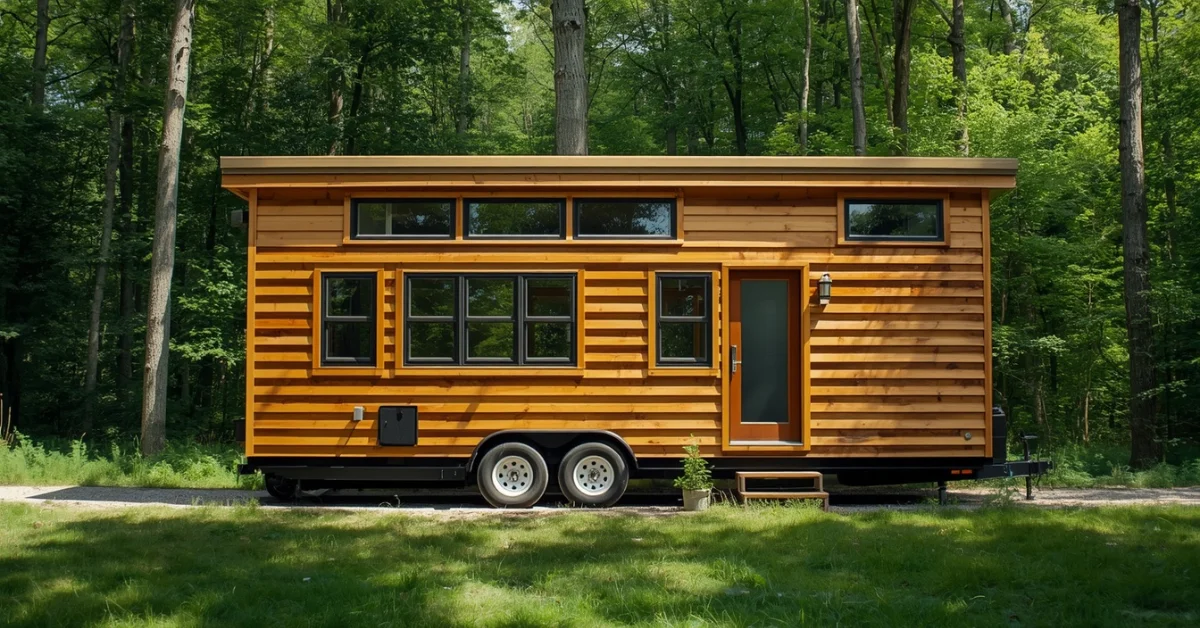
Want to know how to buy a tiny house in the US? The tiny house movement has exploded in popularity — with over 10,000 tiny homes built annually in the US, more Americans than ever are choosing to downsize, reduce debt, and live with more freedom. But buying a tiny house is very different from buying a traditional home. This complete guide shows you exactly how to buy a tiny house, from setting your budget to moving in — with real prices, US builder recommendations, and financing options.
What Is a Tiny House? (And What Type Do You Want?)
Before buying a tiny house, you need to decide which type you want. There are two main categories:
Tiny House on Wheels (THOW)
- Built on a trailer — technically classified as an RV in most US states
- Can be moved to different locations
- No permanent foundation required
- Usually 150–400 square feet
- Price range: $30,000–$90,000 for professionally built
- Best for: People who want flexibility or live in areas with strict zoning laws
Tiny House on Foundation (Permanent)
- Built on a permanent foundation like a regular home
- Classified as a traditional home — subject to local building codes
- Usually 200–600 square feet
- Price range: $40,000–$150,000+
- Best for: People who own land and want a permanent residence
How Much Does a Tiny House Cost in the US?
Here is a realistic breakdown of tiny house costs in 2026:
| Type | Price Range | What’s Included |
|---|---|---|
| DIY Build (shells only) | $10,000 – $30,000 | Materials only, your labor |
| Prefab/Kit Tiny House | $20,000 – $50,000 | Pre-cut materials, some assembly |
| Custom Built on Wheels | $50,000 – $90,000 | Fully built by professional builder |
| Custom Built on Foundation | $60,000 – $150,000 | Permanent structure, full build |
| Used Tiny House | $15,000 – $60,000 | Pre-owned, varies by condition |
Hidden costs to budget for:
- Land purchase or rental: $500–$1,500/month for lot rental, or $20,000–$100,000+ to buy land
- Utility hookups (water, electricity, sewer): $2,000–$10,000
- Building permits: $500–$5,000 depending on state and county
- Delivery and setup: $1,000–$5,000 for tiny house on wheels
- Insurance: $50–$150/month
- Furniture and appliances: $3,000–$10,000
Step 1: Set Your Tiny House Budget
Before looking at any tiny houses, establish your total budget — not just the purchase price, but everything. Use this formula:
Total Budget = Tiny House Price + Land/Lot Costs + Utilities Setup + Permits + Delivery + Furniture + 15% Emergency Fund
Example for a realistic first-time buyer:
- Custom tiny house on wheels: $65,000
- Lot rental (first year): $9,600
- Utility hookups: $3,000
- Permits and fees: $1,500
- Furniture and appliances: $5,000
- Emergency fund (15%): $12,000
- Total: ~$96,000
Pro Tip: If your budget is under $50,000, focus on used tiny houses or tiny houses on wheels. The used market has excellent options — check TinyHouseListings.com for current US listings.
Step 2: Choose Your Tiny House Builder
Choosing the right builder is the most important decision in the tiny house buying process. Here are the most reputable tiny house builders in the US in 2026:
Top US Tiny House Builders
- Tumbleweed Tiny House Company (Colorado) — One of the most established US builders since 1999. Prices from $59,000. Known for quality and customization options.
- Wind River Tiny Homes (Tennessee) — Award-winning builder, prices from $75,000. Exceptional craftsmanship and luxury finishes.
- Incredible Tiny Homes (North Carolina) — Budget-friendly options starting around $45,000. Good for first-time buyers.
- Escape Traveler (Wisconsin) — Specializes in tiny homes on wheels, prices from $50,000. RVIA-certified.
- Liberation Tiny Homes (Pennsylvania) — Custom builds starting at $55,000. Strong reputation for customer service.
What to Look for in a Builder:
- RVIA certification (for tiny homes on wheels) — ensures it meets safety standards
- Minimum 3–5 years in business
- Clear warranty — most reputable builders offer 1-year structural warranty
- Transparent pricing — no hidden fees
- References from past customers
- Build time: typically 3–6 months for custom builds
Warning: Be cautious of builders asking for more than 50% deposit upfront. Always have a written contract with detailed specifications before paying anything.
Step 3: Understand Zoning Laws in Your State
Zoning laws are the biggest challenge for tiny house buyers in the US. Rules vary dramatically by state and even by county. Here is the current landscape:
Most Tiny House Friendly US States (2026):
- Texas — Very flexible zoning, many counties allow tiny homes on wheels and on foundations
- Oregon — Has statewide laws allowing accessory dwelling units (ADUs) including tiny homes
- California — Statewide ADU laws make tiny home placement easier, especially in backyards
- Florida — Several counties actively welcome tiny home communities
- Colorado — Growing number of tiny home friendly counties and communities
- North Carolina — Increasingly accommodating, home to several tiny house communities
What to Check Before Buying:
- Contact your county zoning office and ask specifically about tiny houses
- Ask if tiny homes on wheels are classified as RVs or homes in your county
- Check minimum square footage requirements — some counties require 400+ sq ft
- Verify what utilities connections are required
Resource: The American Tiny House Association provides state-by-state zoning information and advocacy resources for tiny house buyers.
Step 4: Find Land or a Tiny House Community
Where will your tiny house go? This is one of the most overlooked aspects of buying a tiny house. Your main options:
Option 1: Buy Your Own Land
The most freedom but highest upfront cost. Rural land in the US starts at $1,000–$5,000 per acre in affordable states like Arkansas, Mississippi, and West Virginia. Near cities, land costs $20,000–$100,000+ per acre.
Option 2: Rent a Lot in a Tiny House Community
Growing rapidly across the US — lot rents typically $400–$800/month. Benefits include shared amenities, established utilities, and a community of like-minded neighbors. Find communities at TinyHouseListings.com or search “tiny house community near me.”
Option 3: Park on Family or Friend’s Land
The most affordable option — many tiny house owners start here. Check local zoning rules first — some areas restrict this.
Option 4: RV Parks and Campgrounds
For tiny houses on wheels — many RV parks accept RVIA-certified tiny homes. Monthly rates $300–$700 depending on location and amenities.
Step 5: Secure Financing for Your Tiny House
Financing a tiny house is more complicated than a traditional mortgage because most tiny homes do not qualify for conventional home loans. Here are your options:
| Financing Type | Best For | Typical Rate | Loan Amount |
|---|---|---|---|
| Personal Loan | Any tiny house under $100K | 7–15% APR | Up to $100,000 |
| RV Loan | RVIA-certified tiny homes on wheels | 6–10% APR | Up to $300,000 |
| Home Equity Loan | Buyers who own a traditional home | 6–8% APR | Based on equity |
| Construction Loan | Tiny homes on permanent foundation | 7–10% APR | Up to $500,000 |
| Chattel Loan | Manufactured/mobile homes | 7–12% APR | Up to $200,000 |
Best Lenders for Tiny House Financing in the US:
- LightStream (SunTrust) — Personal loans up to $100,000, rates from 7.99% APR, no fees
- Koala Eco Finance — Specializes in tiny home and sustainable home financing
- 21st Mortgage Corporation — Specializes in manufactured and tiny home loans
- Credit unions — Often offer the best personal loan rates for members — check your local credit union first
Pro Tip: If you plan to finance, work on your credit score before applying. A credit score of 680+ will get you significantly better rates. Check out our guide on how to fix your credit to buy a house before applying for any loans.
Step 6: Inspect Your Tiny House Before Buying
Whether buying new or used, always get an inspection before finalizing your purchase:
- New build: Inspect at the builder’s facility before delivery — check all systems, finishes, and that it matches your contract specifications
- Used tiny house: Hire a professional inspector — costs $200–$500 and is absolutely worth it
- Check specifically: Roof, plumbing, electrical, insulation, loft access, window seals, trailer frame (for THOW)
- For THOW: Check trailer condition, tire age, and lights — these are safety critical items
Tiny House vs Traditional Home: Is It Worth It?
| Factor | Tiny House | Traditional Home (US Average) |
|---|---|---|
| Purchase price | $30,000 – $150,000 | $420,000 (US median 2026) |
| Monthly mortgage/payment | $300 – $800 | $2,000 – $3,500 |
| Utility costs | $100 – $300/month | $300 – $600/month |
| Maintenance costs | $500 – $2,000/year | $3,000 – $10,000/year |
| Property taxes | $0 – $1,500/year | $3,000 – $12,000/year |
| Flexibility | High (THOW can move) | None |
| Financing difficulty | Moderate | Easy (conventional mortgage) |
Frequently Asked Questions
How much does a tiny house cost in the US?
A professionally built tiny house in the US costs between $50,000 and $90,000 for a tiny home on wheels, and $60,000 to $150,000 for a permanent foundation tiny home. Used tiny houses can be found for $15,000–$60,000. DIY builds start around $10,000–$30,000 for materials only.
Can you get a mortgage for a tiny house?
Traditional mortgages are difficult for tiny houses because most do not meet minimum square footage requirements. Your best options are personal loans, RV loans (for RVIA-certified tiny homes on wheels), or construction loans for permanent foundation tiny homes. LightStream and 21st Mortgage are popular US lenders for tiny home financing.
Where can you legally park a tiny house in the US?
The most tiny house friendly states are Texas, Oregon, California, Florida, and Colorado. You can park in tiny house communities, RV parks (if RVIA certified), on your own land, or on family/friend’s property. Always check local county zoning rules before purchasing — rules vary significantly by location.
Is buying a tiny house a good investment?
Tiny houses typically do not appreciate in value like traditional homes — especially those on wheels. However, they offer significant lifestyle value: dramatically lower monthly costs, freedom from a large mortgage, and reduced environmental impact. Most tiny house buyers report significantly improved financial freedom and quality of life, even if the monetary return on investment is modest.
How long does it take to buy a tiny house?
The timeline from decision to move-in is typically 6–12 months for a custom build, or 1–3 months for a used or pre-built tiny house. The longest parts are waiting for a custom builder’s schedule (3–6 month waitlists are common for top builders) and securing land or a lot placement.
Start Your Tiny House Journey Today
Now you know exactly how to buy a tiny house in the US — from setting your budget and choosing a builder to navigating zoning laws and securing financing. Start by deciding between a tiny home on wheels or on a foundation, then research builders in your region and check zoning rules in your target location. The tiny house lifestyle offers genuine financial freedom — and thousands of Americans are making the move every year.